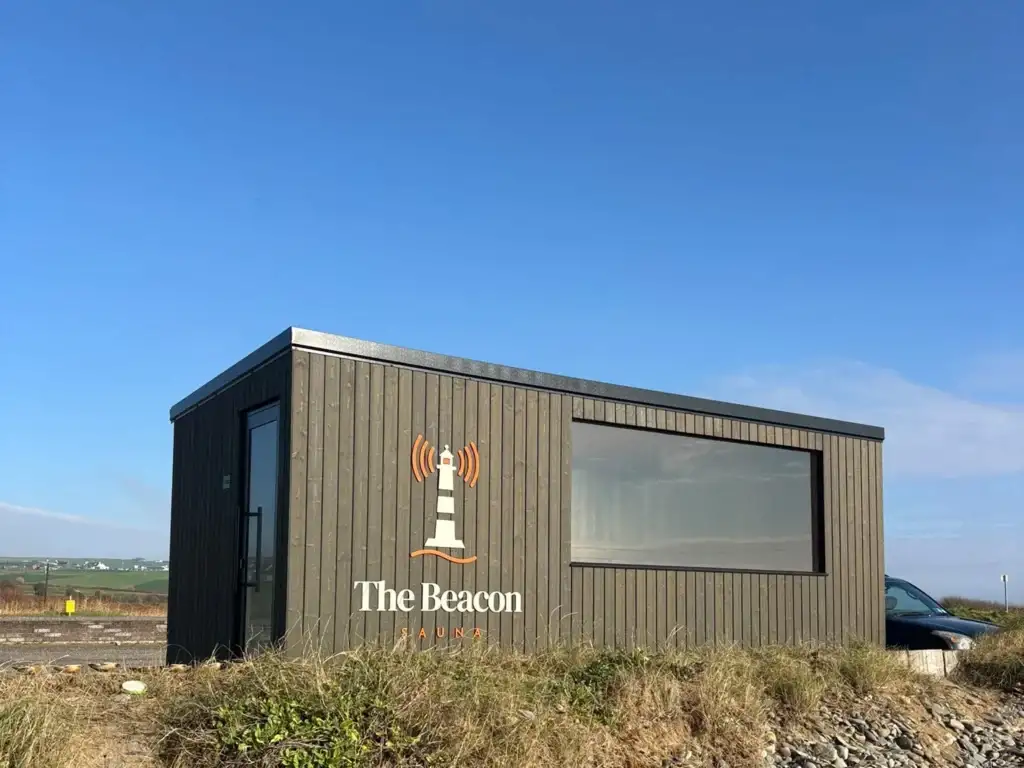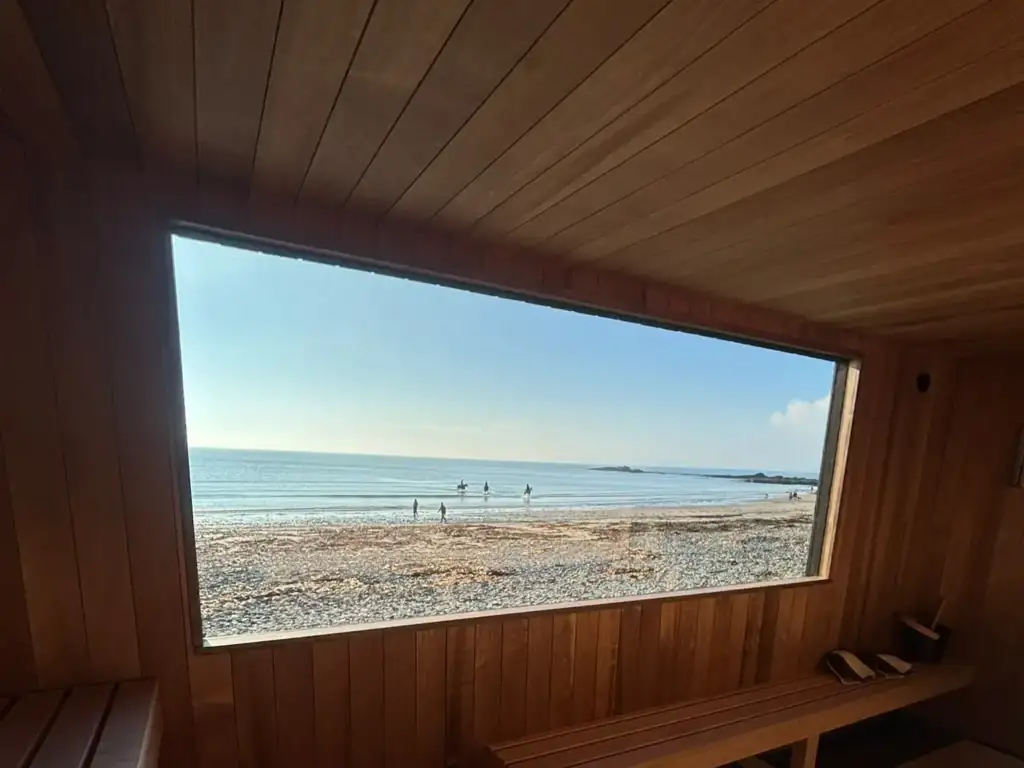
Ice baths are everywhere now. Gyms sell plunge pools, apps time your cold exposure, and someone on your feed is sitting in a wheelie bin of ice. The idea is old, though. The Finns go from sauna to frozen lake, and the Irish sweathouse ended with a dip in the stream or the sea. At The Beacon the cold plunge is the Atlantic, a few steps from the door.
What hot and cold rounds are
Contrast therapy just means going back and forth between heat and cold in rounds. The heat opens the blood vessels near your skin; the cold narrows them again. Most people do it because it feels good afterwards: awake, loose, a bit giddy.
What the research says
Less than the marketing, more than nothing.
- Soreness: a pooled look at 13 randomised trials found that hot and cold water rounds eased muscle soreness a little better than resting, for up to four days after exercise. They weren’t clearly better than cold water alone.
- Heat on its own: sauna after training has its own evidence, for endurance, fitness and blood pressure. Our sauna after sport post covers it.
- Cold after lifting: one 12-week trial found that cold water straight after strength training slowed gains in muscle and strength. If you’re lifting to build muscle, keep the cold for other days or leave a few hours.
The honest summary: it’s a good way to feel better after a hard week, and the heat does more of the heavy lifting than the cold.
How to do a round at The Beacon
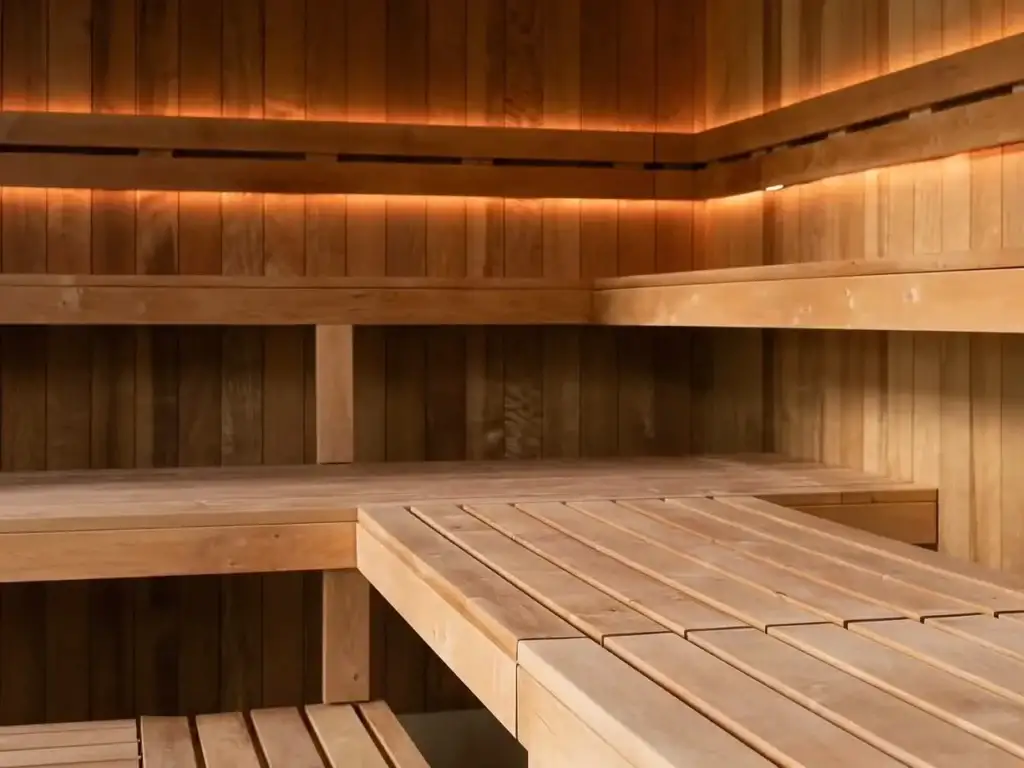
- Heat: 10 to 15 minutes on the bench. Lower bench to start, top bench when you’re ready.
- Cold: walk down to the water and go in for as long as feels right. For most people in winter that’s under a minute. Head out of the water is fine.
- Rest: sit outside for a few minutes and let your breathing settle before going back in.
- Repeat: two or three rounds fit in a 55-minute session.
Many people finish on the cold, others finish in the heat. There’s no rule. Our salt scrub is for the last dip.
How cold is the sea?
It changes through the year, from the low teens in late autumn to single figures by late winter. The conditions panel on the Visit page shows today’s reading from the nearest weather buoy.
Stay safe in the water
- There’s no lifeguard outside the summer bathing season. Only go in if you’re a confident swimmer and the sea looks safe.
- Go in slowly. The first breath in cold water is the one that catches people out.
- Never go in alone, and never after a drink.
- Skip the cold if you have a heart condition or blood pressure problems unless your GP has said it’s fine. If you’re pregnant, please don’t use the sauna.
- Not a swimmer? Stand outside in the wind instead. It still counts.